japan

5 THINGS YOU SHOULD KNOW BEFORE VISITING JAPAN IN 2024

Tuesday, 7 November 2023
There's not many countries that I've visited in the last few years that I'm in a rush to go back to, but I'd love to see Japan again (mostly for the food). We spent just over a week travelling between Tokyo and Kyoto and I think we managed to see all the cities have to offer. On my next trip I'd love to also visit Osaka and try all of their famous street food. If any of these cities are on your bucket list, keep reading to find out 5 tips for travelling to Japan in 2024. 


1. Research the best time to go for what you want to see.


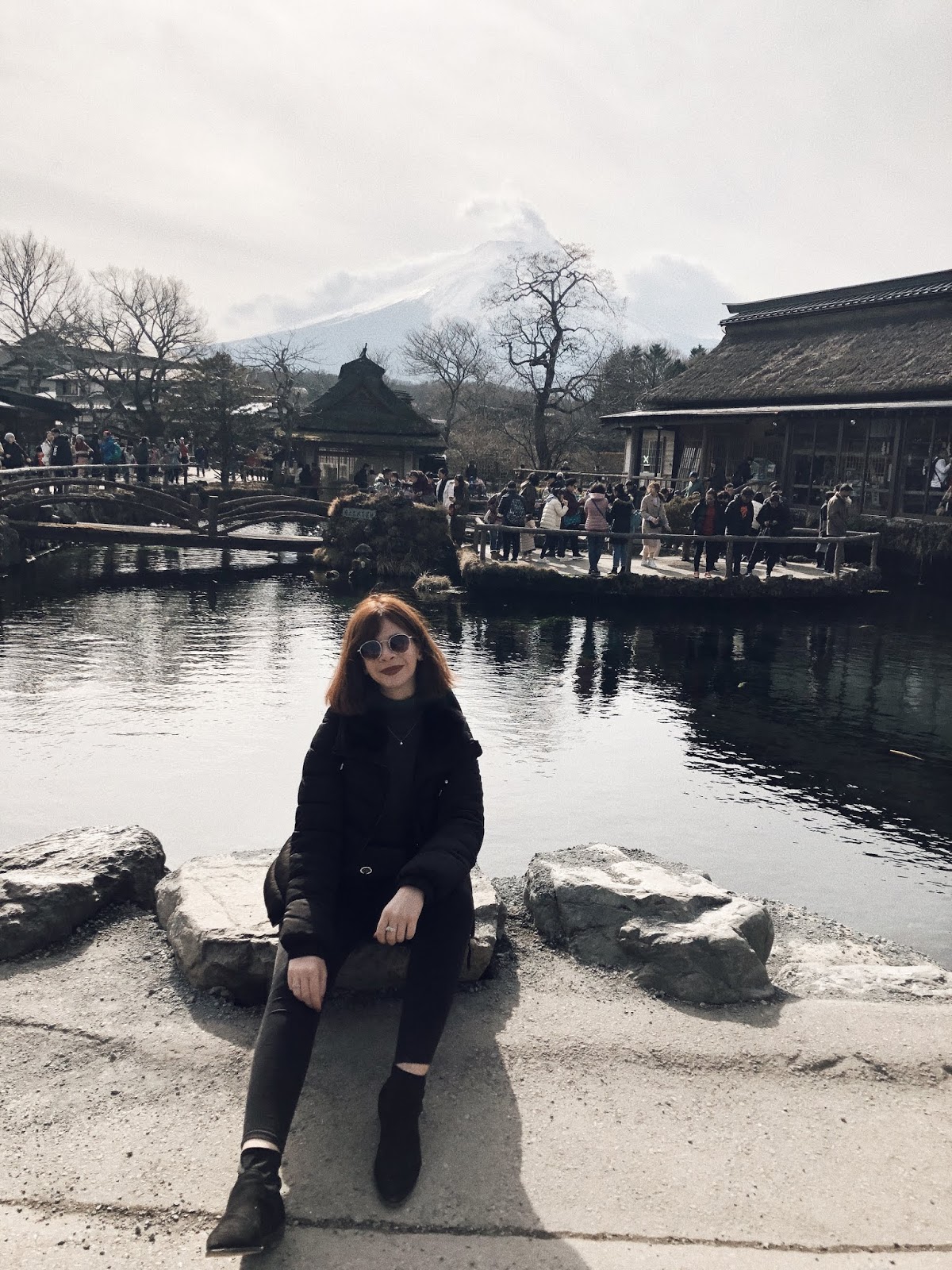
We visited in February because it's when we kicked off our Asia trip, and it was definitely cold! We did manage to see Mount Fuji which as told by our guide, is very dependent on what the weather is like that day. You can take a day trip to Mount Fuji from Tokyo. We paid £45 which included pick up from Ueno station and drop-off (1.5 hour journey), and we visited 3 locations. We couldn't actually go to the 5th Station (entrance to the mountain) as it had been snowing and so the roads were too slippery, but we did get great views of Fuji from Kawaguchiko lake and Oshino HakkaiTo increase your chances, the best time to visit Mt Fuji is between November and February


If you're more interested in cherry blossom season, then the best time to visit is in the spring (late March/early April). There's no shortage of cherry blossoms in Tokyo, one of the more popular places to see them is at Ueno Park. If you want to find somewhere a little less crowded, head to the English Garden in Shinjuku Gyoen. If you're in Kyoto, you'll want to see the 'weeping cherry tree' at Marayama Park. 


2. Purchase a SIM or eSIM for Japan.


The first question on most of our minds when we land in a new country is - how can I get connected to the internet? Your best choices are either purchasing a local sim or carrying a portable Wi-Fi device. Mobal specialises in providing contract-free Japan SIM cards and Japan eSIMs for travellers, whether you're going to be visiting briefly or staying long-term. If you need any help they provide English customer service and their profits also go to charity. 

The best part about purchasing an eSim is that you don't have to risk misplacing your old sim and you don't have to queue up at the airport at one of the kiosks either! 

3. Get an IC card at the train station.


I'm not sure if the situation has improved since I went to Japan in 2018, but the train stations in Japan were probably some of the most confusing I've been to! Firstly because there is barely any english signage and secondly, there were 2 main train/metro companies and it wasn't always clear if the ticket you had bought covered your journey. 

To avoid this I suggest you firstly get an IC card from the ticket machine, which is essentially like an Oyster card. You can tap this at any of the stations and means you don't have to keep buying single journey tickets. Secondly, use Google Maps! This will make getting to your destination 100 times easier as it will give you the correct platform and everything too. 


4. Stay in a traditional ryokan


You could choose to stay in a chain hotel that you're familiar and comfortable with, or you could properly immerse yourself in the Japanese culture and stay in a ryokan. A ryokan differs from a hotel in that you'll usually sleep on a futon bed and the rooms will be quite minimal and the floors are usually made of 'tatami' matting. Not exclusive to ryokans as you'll see these everywhere, that Japanese toilets have a lot more functions than your regular toilets back home!

You will find a wide selection of ryokans in Kyoto and can vary from budget accommodation to the more luxury style. Kyoto Ryokan Kinoe is a highly rated on in the Gion area in the centre. 


5. Be mindful of cultural differences


Once you've got over all the water functions your accommodation toilet has, there are some other things you should be mindful of when visiting Japan. 

1. Don't eat and walk - even though Japan is full of wonderful street food, you'll never find anyone eating and walking at the same time as it's frowned upon. If you order something in one of the food markets, just stand to the side and eat it if you can't find a place to sit. 

2. Make sure you're in the right train carriage - as passed 6pm, some trains have 'female only' carriages (which I think is great). You'll also find that locals form an orderly queue by the train doors when waiting to board, so there's no pushing and shoving to get in. 

3. Slurp that bowl - it's actually a sign of respect and that you've really enjoyed your meal! 


I hope you've found this post useful. If you have any other questions about Japan, feel free to message me on my socials or check out my travel guides below!

G


3 days in Tokyo, Japan

Powered by GetYourGuide

HOW TO PLAN A WEEKEND IN KYOTO, JAPAN.

Wednesday, 13 March 2019
Following on from our 3 nights in Tokyo, we flew to Osaka airport to continue our Japan trip to Kyoto. As beautiful as Kyoto was, I think it is a trip we should have probably left for March as the cherry blossoms weren't in season yet, meaning that we didn't get to witness the shrines and temples in all their pink glory. That being said there was plenty to see that didn't need the added floral aesthetics to appreciate them. Here's my guide on planning your trip to Kyoto, Japan.

tea with gi kyoto guide


GETTING TO AND AROUND KYOTO


There are several ways to get to Kyoto from Toyko - the quickest and most efficient ways are either taking a bullet train from Tokyo station (prices start at £90) or fly to Osaka airport (around £50). We decided to fly and it was a fairly quick and simple trip, and I recommend flying with All Nippon Airways. There is a Limited Express Haruka train that takes you from Osaka airport to Kyoto station for £20 and the journey time is around 75 minutes. 

WHERE TO STAY IN KYOTO


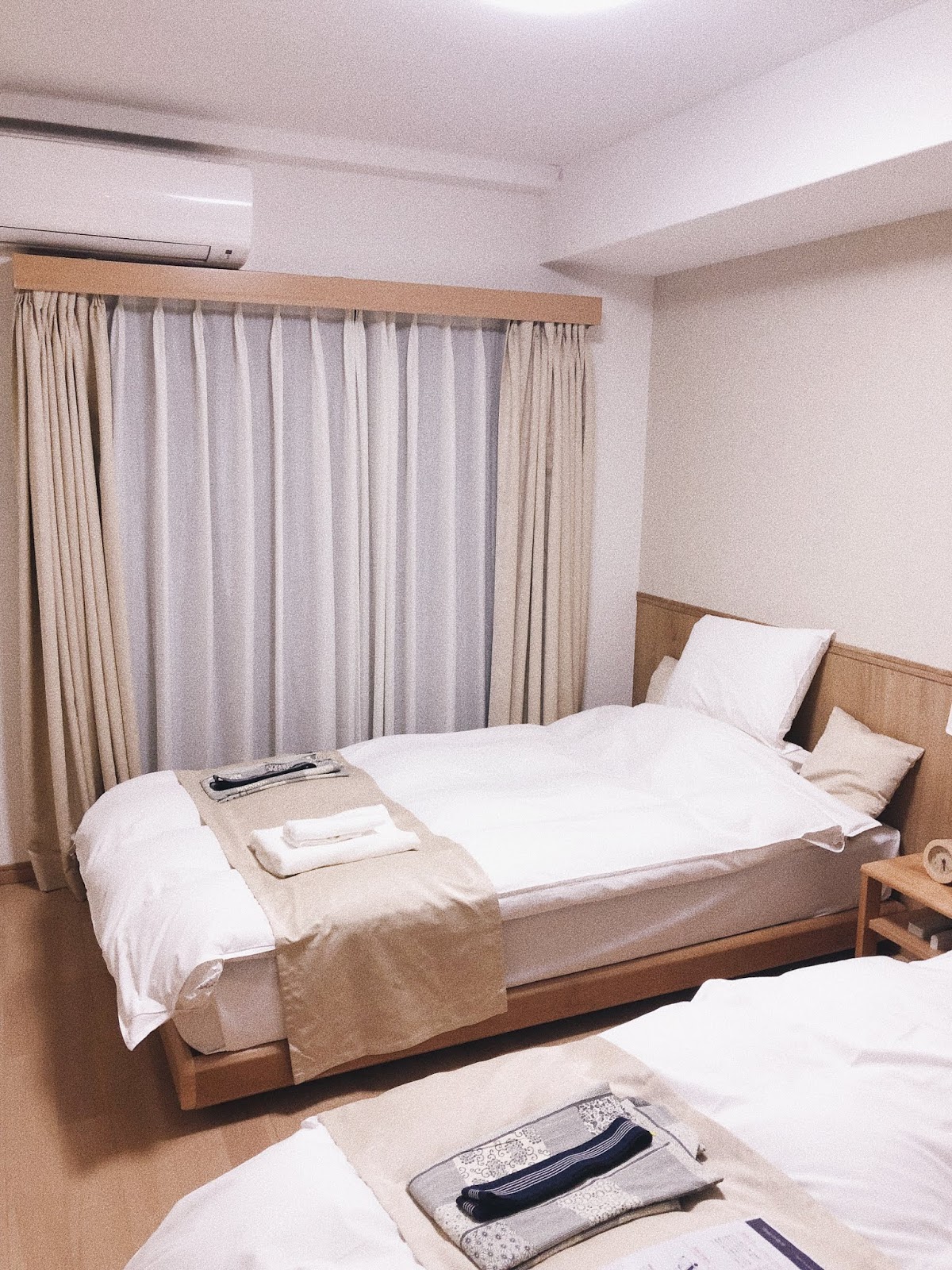
We stayed at Suzakukan Suzaku Crossing and would 100% recommend it. The apart-hotel was a 5 minute ride (or 20 minute walk) from Nijo station and Nijo Castle. The apartments were decorated in an authentic Japanese design and were clean, spacious and comfortable. They also come with washing machines so we were able to wash our clothes properly instead of doing the whole 'soap and water and hang on the bathroom rail' job. Most importantly, they had good Wi-Fi.

suzakukan suzaku crossing


DAY ONE IN KYOTO


AM - ARASHIYAMA DISTRICT 
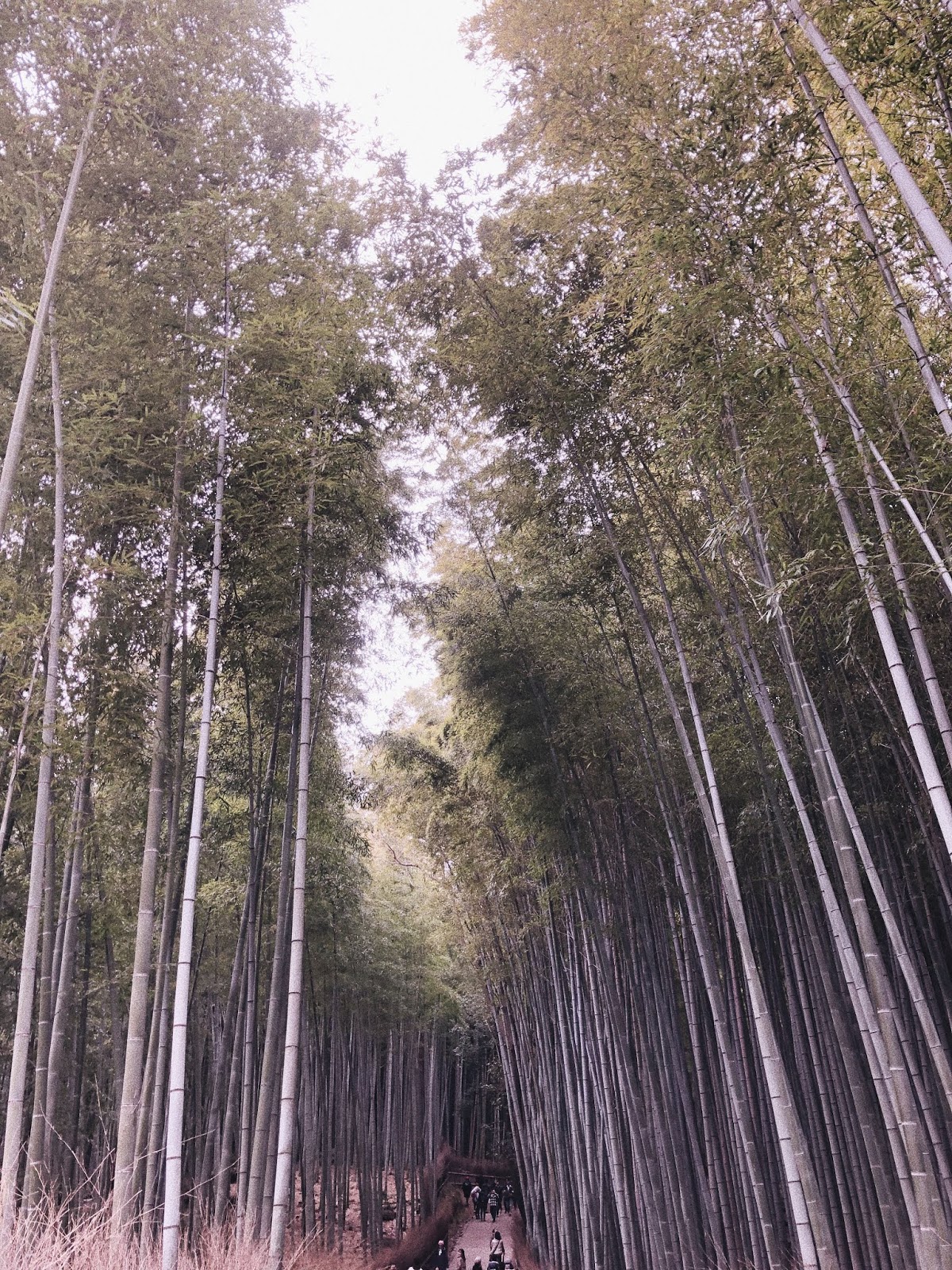

We started off our weekend with one of Kyoto's top sights - the Arashiyama Bamboo Grove. It's pretty much just a long pathway filled with soaring stalks of Bamboo. The earlier you get here the better as it's one of Kyoto's most visited sites, so it can get pretty busy. In this area you'll also find the Tenryu-Ji Temple and from here you will find the main path to the grove. The main street of Arashiyama is a pleasant walk in itself, as it's filled with lots of quirky little cafes, shops and restaurants. If you're looking to visit a cat cafe the Bengal Cat Cafe is also on this street. For a lunch spot I recommend Arashiyama Yoshimura which serves traditional Japanese food and fair prices and boasts a great view from the seating area.

bamboo grove

kyoto cafes


PM - GOLDEN PAVILION


The Kinkaku-Ju Temple (known as the Golden Pavilion) is Kyoto's most iconic sight - so I recommend going here an hour or so before it closes to beat the large crowds or just as it opens (9am - 5pm). As the name suggestions, it is a temple covered completely in gold leaf. There is also a tea garden in the area, souvenir shops and a couple of statues. To get here, take the 101 or 205 bus outside Kyoto Station and for 230 yen you will arrive outside the pavilion in about 40 minutes. 

EVENING - GION DISTRICT 


If you're looking to spot some real Geisha's then Gion is the place to do so, and the best time to come here is after the sun goes down (for obvious reasons). It's a great area to just walk around and take in the scenery and architecture. Hanami-Koji street is filled with nice places to dine (although they are more on the expensive side), traditional tea houses and machiya houses. Shirakawa Area runs parallel along Shirakawa Canal and is also a pleasant area to walk around. If you do happen to spot any Geishas, try and at least be discrete if you want to take a photo. We saw two but they moved so fast that we just smiled and at them and that was that. To get here take bus number 100 from Kyoto station and you will reach Gion in around 15-20 minutes. 


DAY TWO IN KYOTO


AM - PHILOSOPHER'S PATH
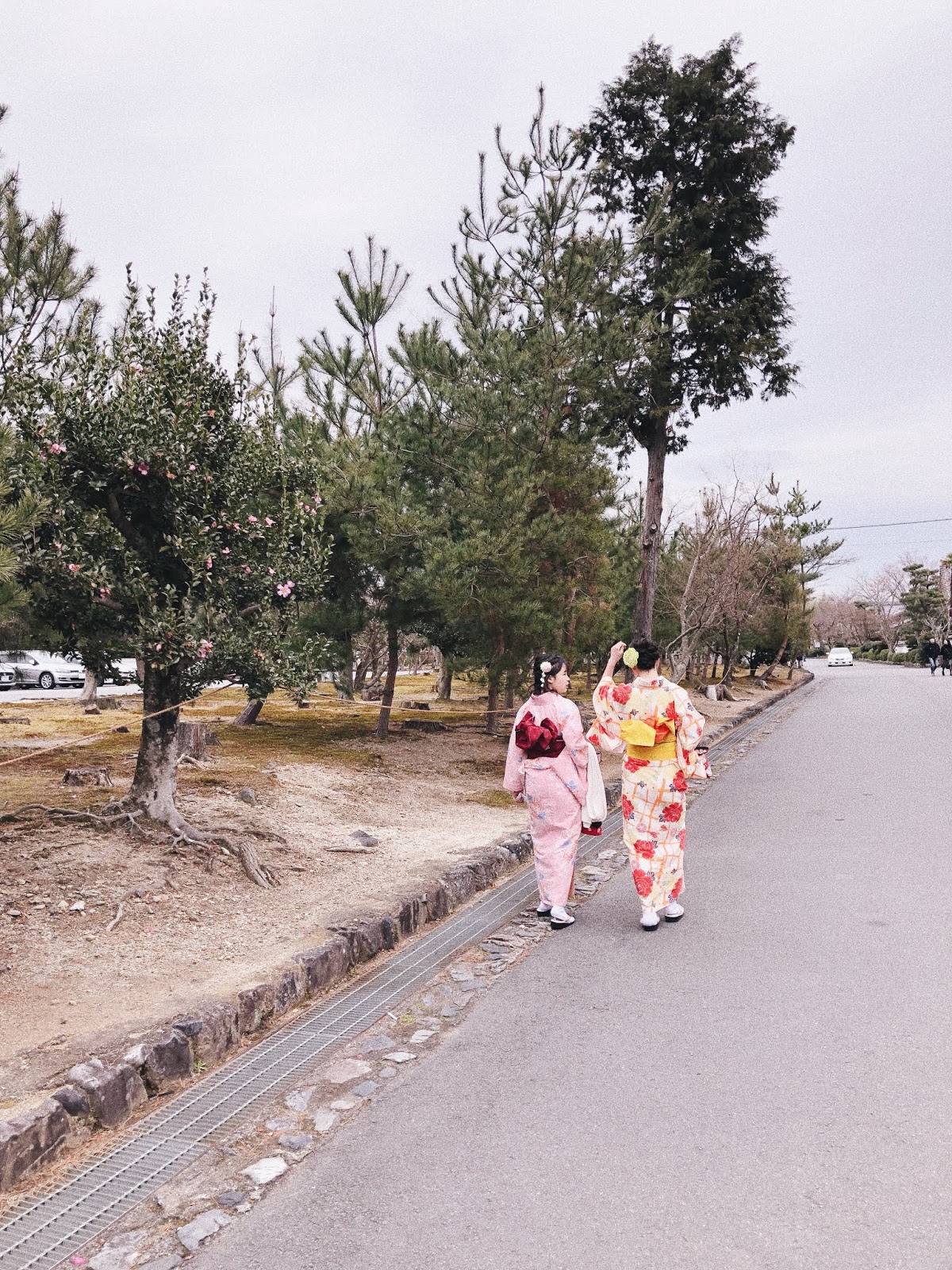

Sadly this has nothing to do with Harry Potter but nevertheless it's a pleasant place to spend your morning in. From start to finish, the walk is around 2km and winds around cafes, boutiques and a number of temples and shrines. We were here in February so the cherries hadn't blossomed yet, but from photos it seems like this place is best visited in March/April once they have. When starting the path, you should first set your map to the Silver Pavilion/Ginkakuji (which unlike the Gold Temple, is not covered in silver). It's more on the black side, so I'm not sure where its name came from - i'm sure Google will tell us. *Google says it was given this nickname in contrast to the Gold Pavilion, and because when the moon light reflected on its exterior it gave it a silver like appearance. To reach the Silver Pavilion, take bus 100 outside Kyoto Station to the end of the line for 230 yen. 

silver pavilion


LUNCH SPOT - NISHIKI MARKET 


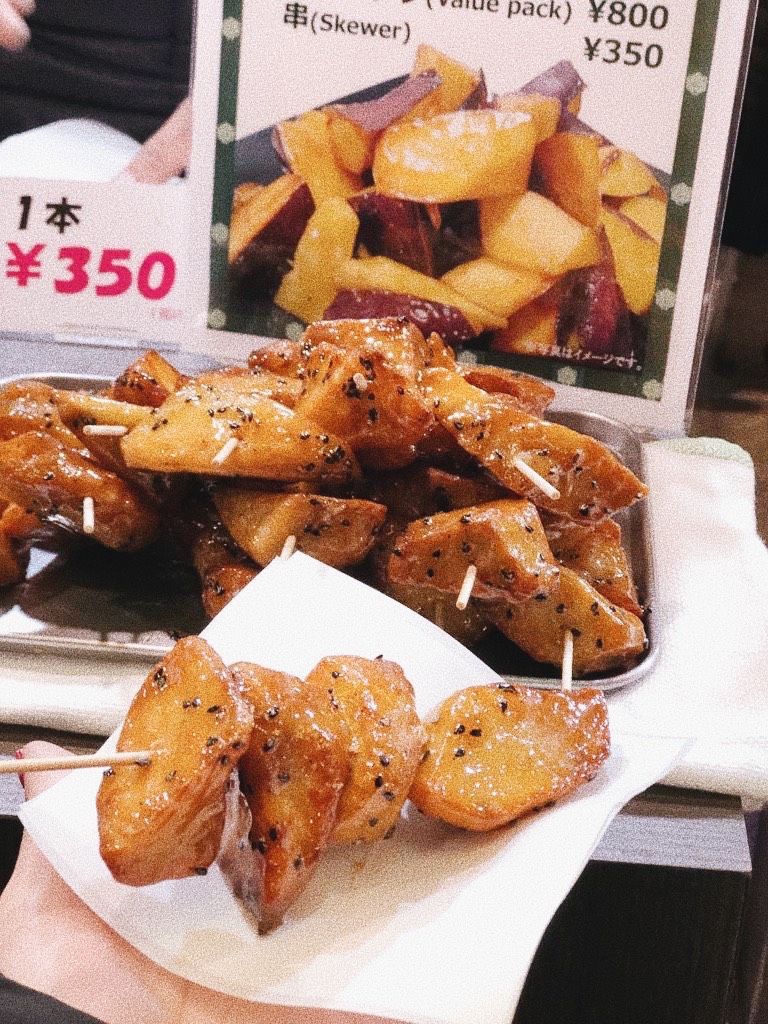
For a cultural eating experience, head to Nishiki market where you will find dozens of stalls selling snacks, sweet treats and slightly more unconventional delicacies. We played it pretty safe by eating baked potatoes glazed with honey on a stick which were delicious. We then ate at Ramen Sen No Kaze which was recommended to me by Amita and the ramen did not disappoint (it's meant to be one of the best ramen places in town). If you're a picky eater then don't worry there are also pizzerias, american bars and a Wendy's in the area. The market is open from 9:30am - 6pm.   

nishiki market


PM - FUSHIMI INARI 


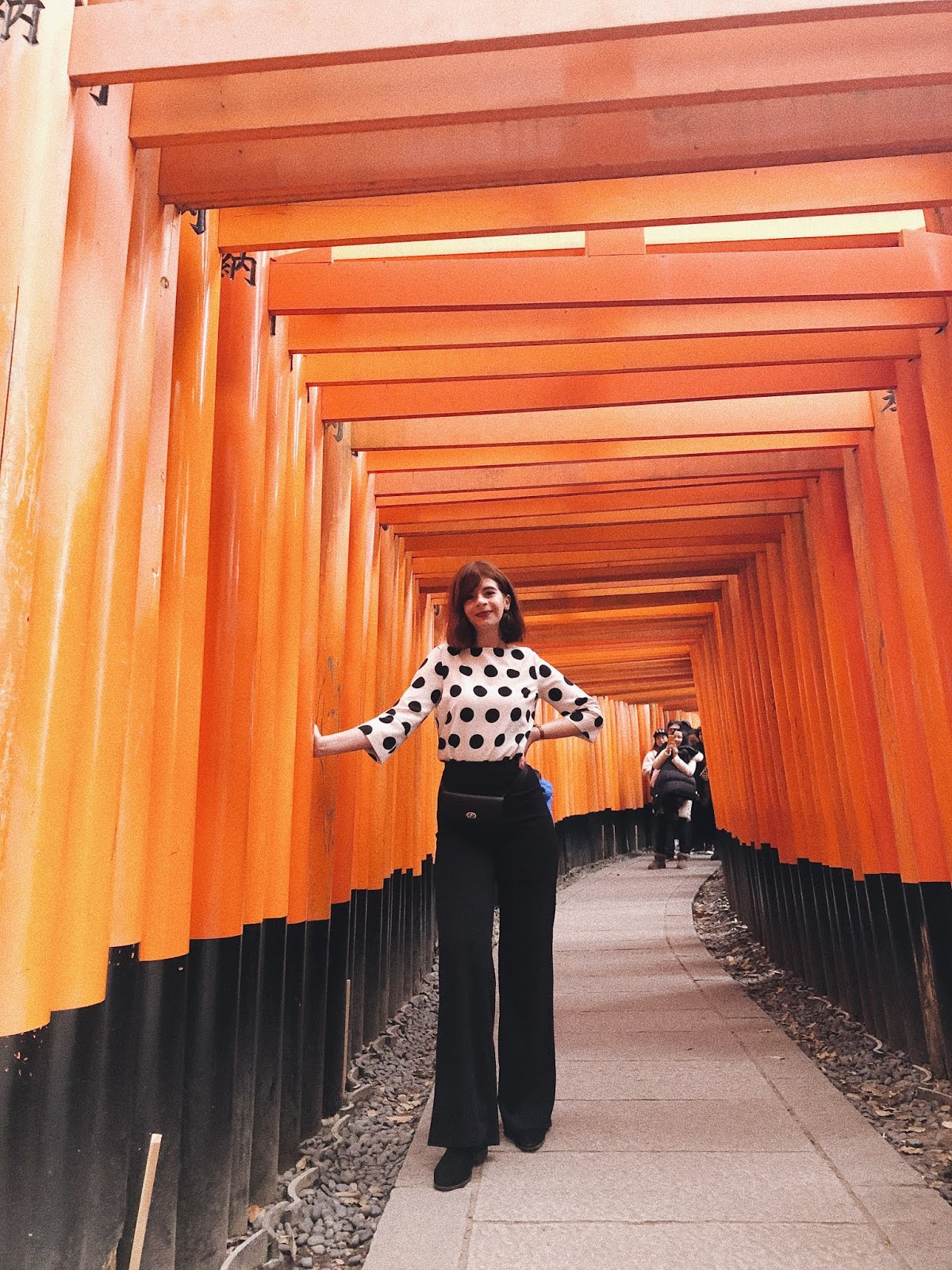
This place is going to be busy whenever you visit, but as always it's best to go when it first opens or 1.5 hours before it closes. In essence, Fushimi Inari is just a very long trail covered with orange tall 'torii' gates. The trail leads to a forest where you can then trek to Mount Inari, which will take you around 3 hours to hike to the summit and back. If you're feeling particularly generous, you can have your name inscribed one of the gates for the small price of 400,000 yen. We were lucky that there were only a couple of people coming back through the gates on the left, so we managed to snap some photos without the crowd (and then people behind us started forming a queue to get their photo taken instead of barging in) - how polite!

fushimi unari


I really liked Kyoto, I think I'd like to visit again in the future, and spend some time in Osaka too. Preferably when the cherries have blossomed, just because I feel like it would be worth seeing. We found a weekend was enough for us, but i'm sure with more research we could have found more stuff to do with a 5 day itinerary. If you've been to Kyoto, I'd love to know what other things you got up to! 

G


tea with gi kyoto pinterest


MAKING THE MOST OUT OF 3 DAYS IN TOKYO, JAPAN.

Tuesday, 5 March 2019
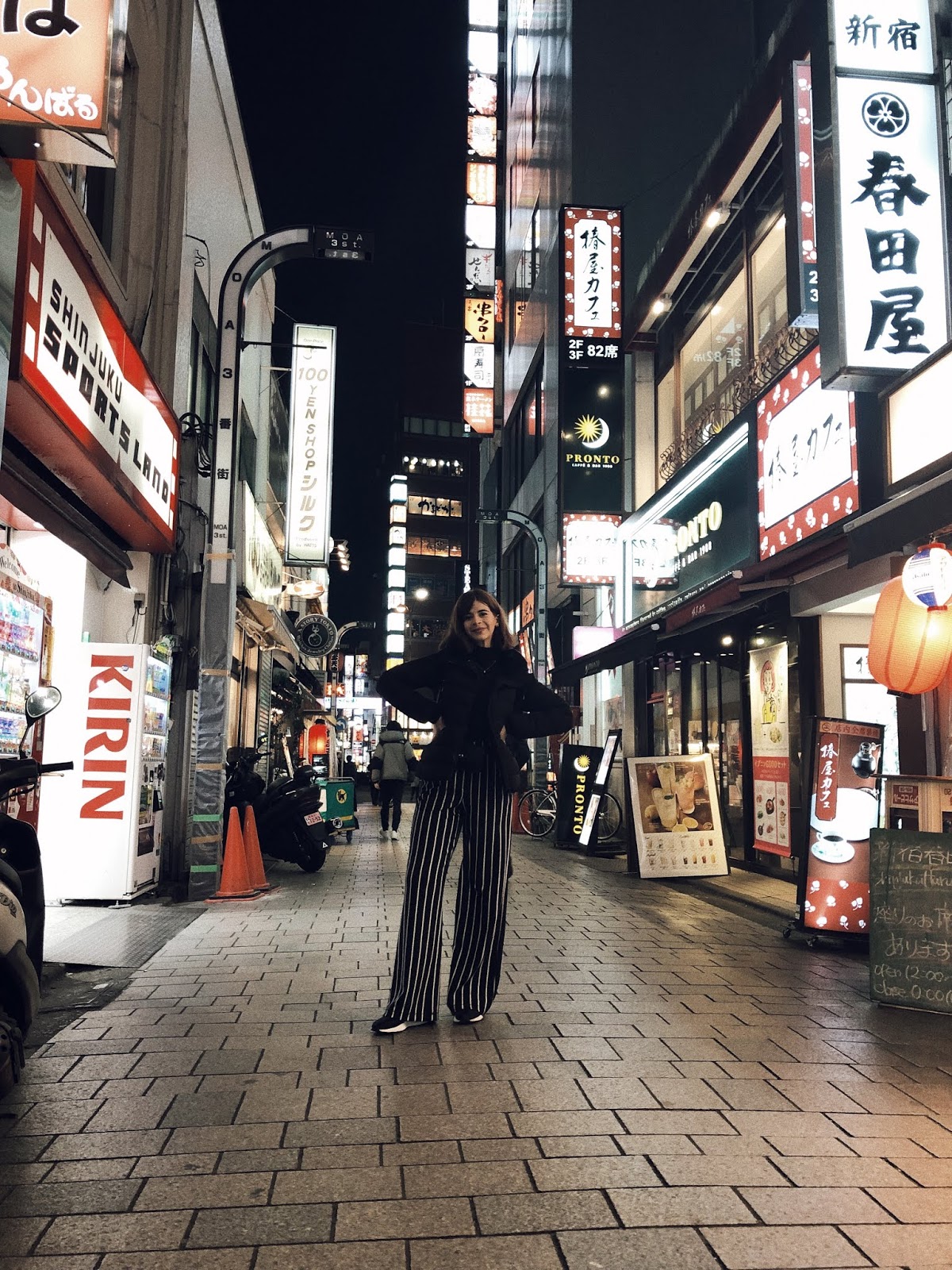
I'm not going to lie, after a month off from blogging it's been a bit of a struggle to try and find the motivation to start writing again (especially because we have moved around so much last month that the whole trip seems like a bit of a blur). Thanks to my precious google docs and my camera roll, I have managed to recall most of the stuff we got up to in Tokyo. 3 days might seem like a short space of time to explore this massive city, but I think we covered everything we wanted to do before moving on to Kyoto. If you're planning a trip around Japan, these are my recommendations for your time in Tokyo, Japan. 

tea with gi tokyo guide

WHERE TO STAY

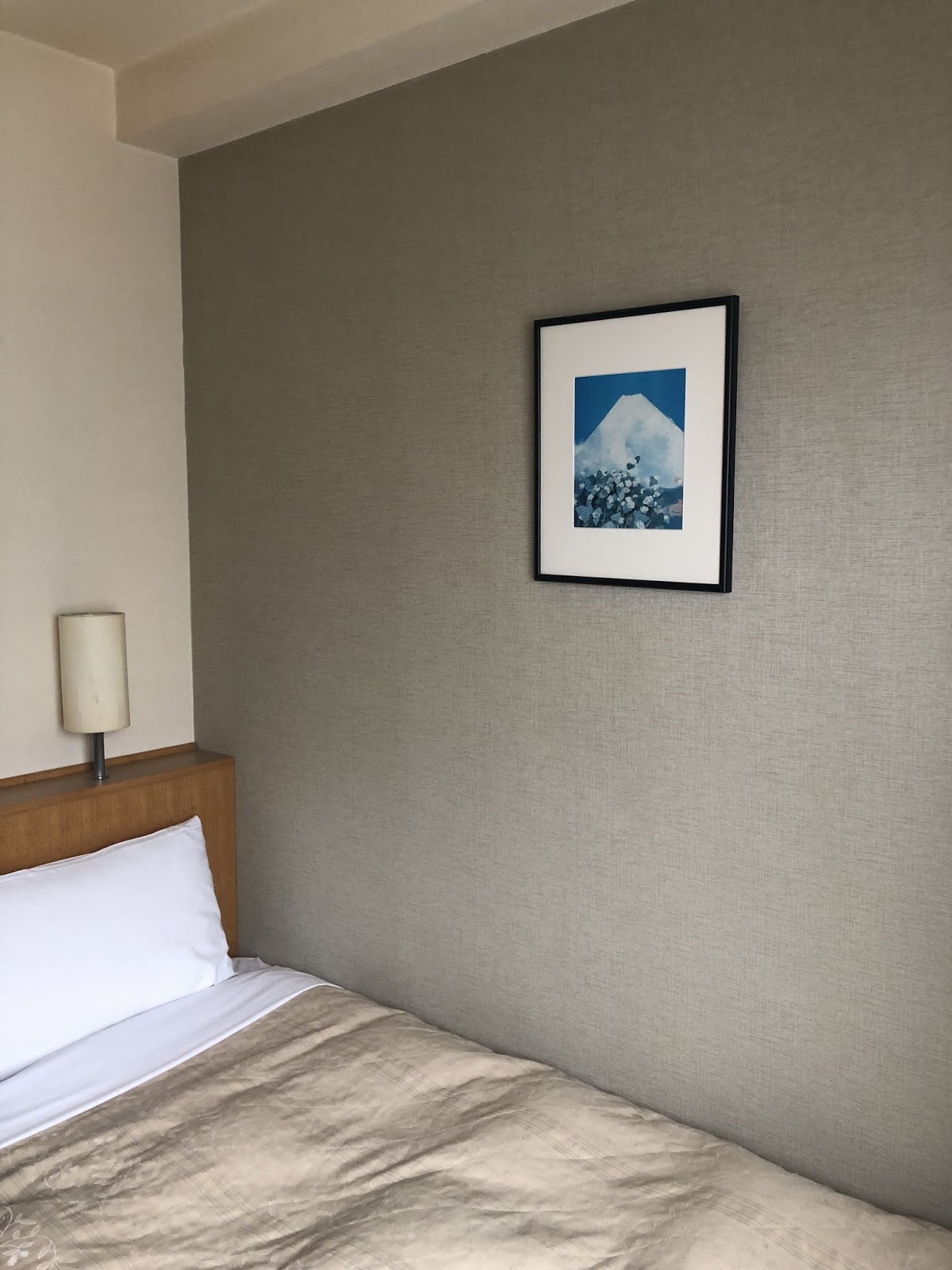
There are a lot of districts in Tokyo that are good to be based in - Shibuya, Asakusa, Shinjuku, Ginza or Roppongi. We stayed in Unizo Inn in Asakusa and found that it had good transport links to all other areas in Tokyo, and we were 400m away from Sensoji temple. The rooms were pretty basic and on the small side, but they were clean and had all the basic amenities (and some very nice shampoo and shower gel may I add). 

unizo inn

WHAT TO DO 

I think the easiest way to write this up is to suggest things by area, so that you're not running back and forth on the subway and can just explore each district and move on. 

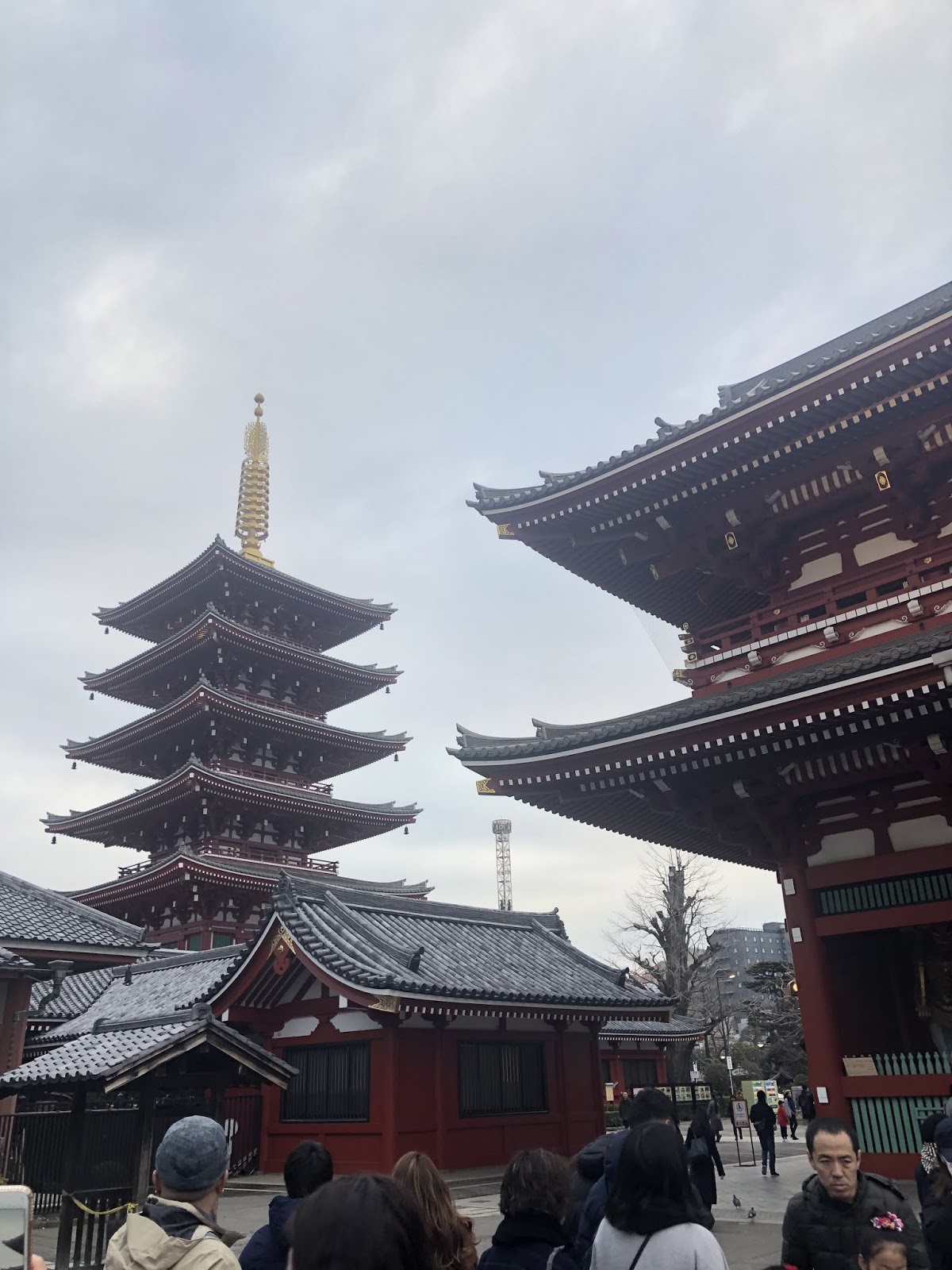
Asakusa: We got a very authentic traditional Japanese vibe from this district, and was nice to just wander around here and take in everything around us (deep, I know). We first came across Nakamise Dori which is a 250-meter long shopping street between the Kaminarimon and Hozomon gates of Sensoji Temple. Here you can find lots of little food stalls, souvenirs and unique little trinkets.  

Once you walk through this you'll find the Sensoji Temple in front of you and after you've taken your instagram photos and marvelled at its beauty there are a couple of 'activities' you can do here. You can throw a coin into the collection box and clap, pray and ring a bell (I just copied what everyone else was doing). You can get purified by the dragon-themed fountain by taking the ladle of water and wash your left hand, then wash your right hand, wash your mouth, then wash the ladle, and put it back (or just copy what everyone else is doing). You can also get your fortune told for 100 yen, and if you don't like what you get told then you can wrap the paper on a nearby pole, tree etc to leave the bad fortune behind.

sensoji temple

Shinjuku/Kabukicho: I recommend coming here when the sun has gone down so you can properly appreciate all the neon lights and signs. Kabukicho has robot cafes and is also home to the Golden Gai (Tokyo's former red light district). Here you will find over 200 bars, some that only fit 2-3 people in them. Not all these places welcome tourists, but you will see signs outside the ones that do. 

Shibuya: The first thing we did when we got here was rush to Starbucks across the worlds biggest crossing (simply known as the Shibuya Crossing) because it was pissing down with rain. You do get a great view of the intersection from the Starbucks cafe, and I ordered a matcha latte and matcha waffle so it did make the experience slightly more cultural. 

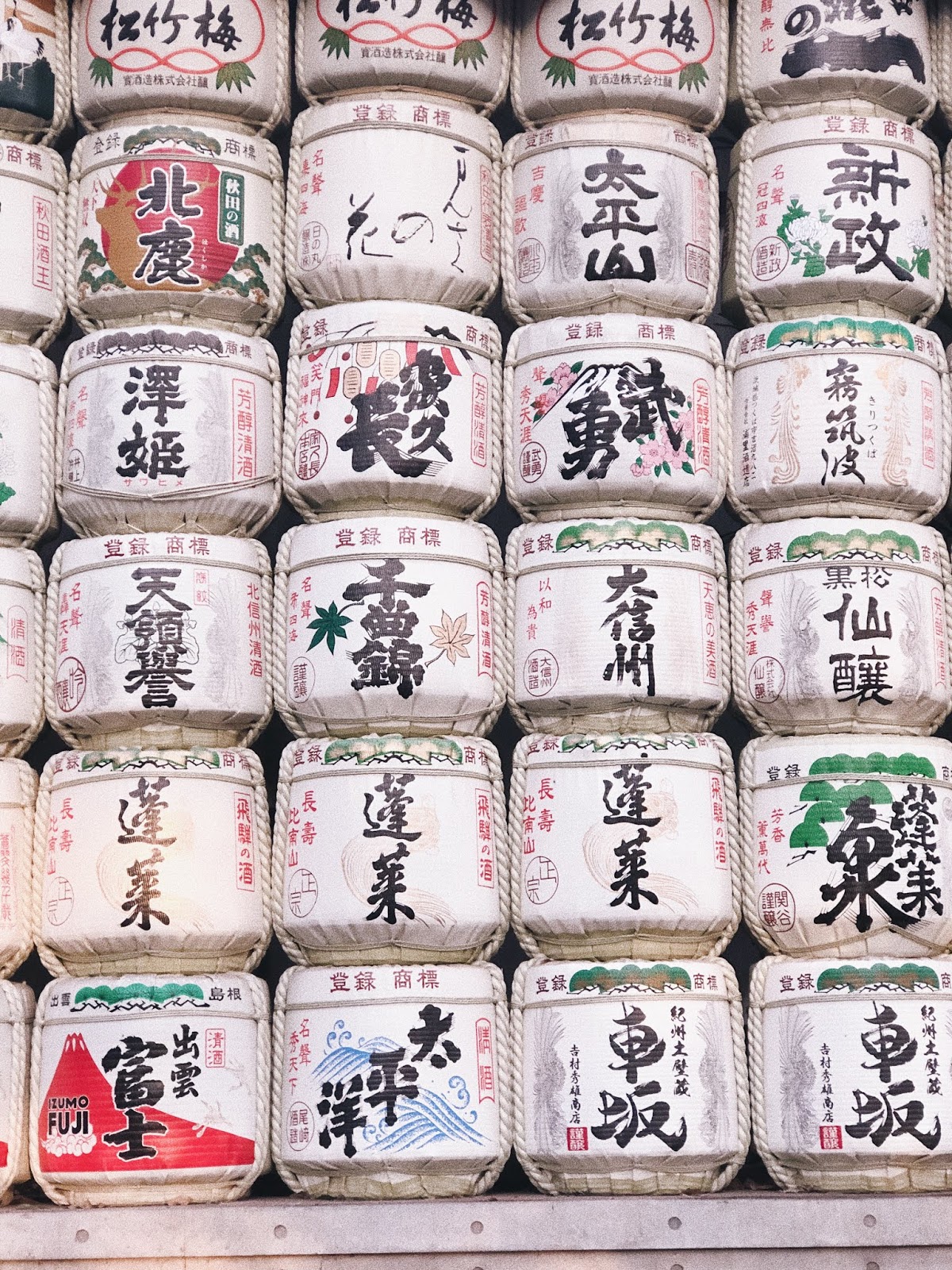
Here you'll also find the statue of Hachiko the famous dog that waited everyday for his guardian to come home from work, even after he died. If you want to find out more about this before your trip and make it a bit more sentimental, watch Hachi: A Dogs Tale. There is a pleasant walk to get to the Meiji Shrine which was dedicated to the deified spirits of Emperor Meiji and his wife, Empress Shōken.

meiji shrine

If you've watched the film Lost in Translation (or Shawn Mendes music video for Lost in Japan) there's a popular scene where Scarlett Johansson is wearing a pink wig and singing karaoke in a booth with Bill Murray. You can do the same thing at Karaoke Kan and if you ask for their specific booth, you get some great views of the city. We had a blast doing this, it only cost £15 for an hour and it included a drink, costumes if you wanted to borrow some and a private booth, so I could scream I'M OFF THE DEEP END WATCH AS I DIVE IN as loud and off-tune as I wanted to. 

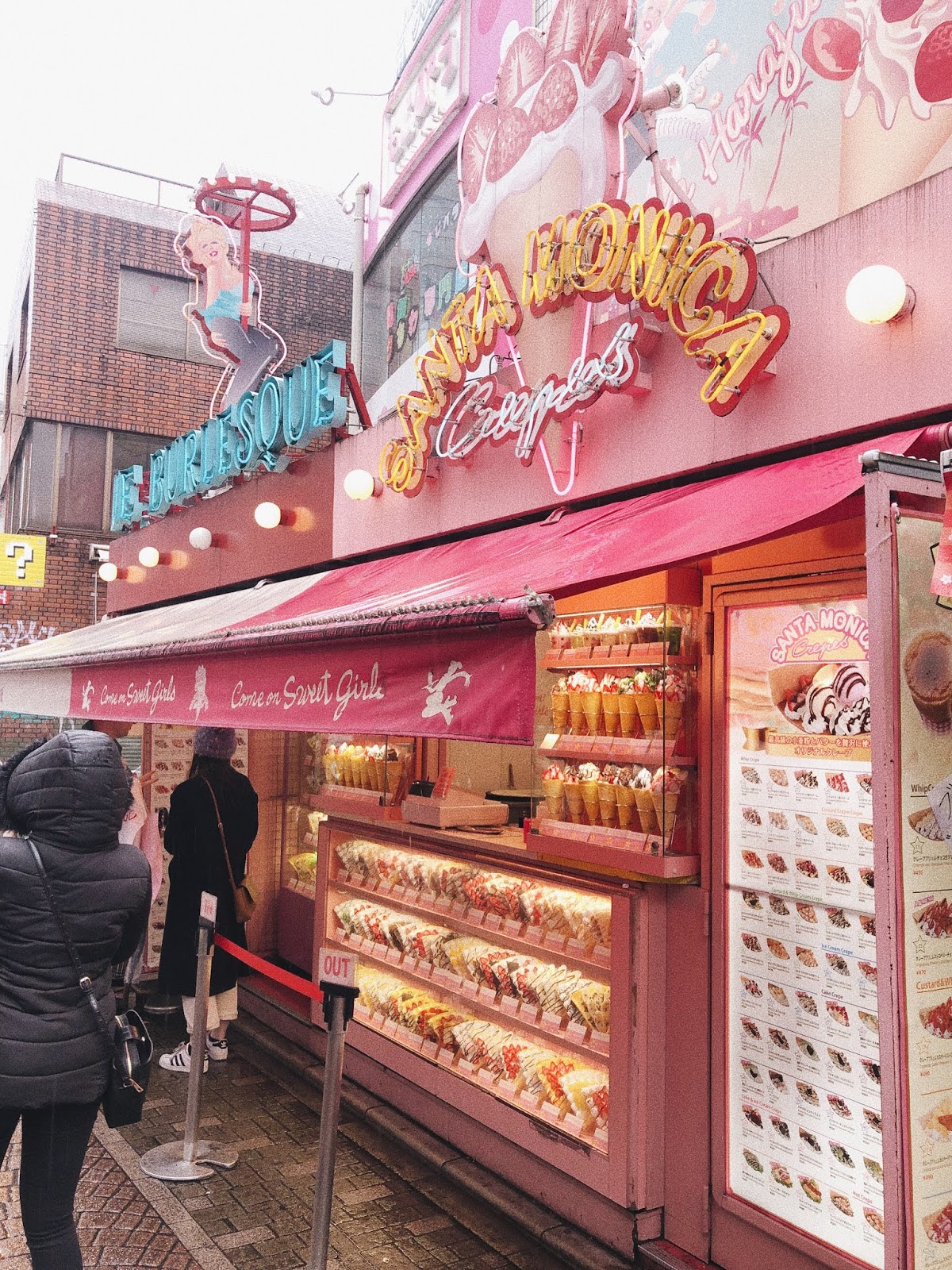
Harajuku: Here you will find everything cute, quirky and unique that is Japan. We head to Takeshita street which was lined with a lot of pink. The street was lined with harajuku fashion shops, stalls selling a large variety of crepes, and themed cafes.

harajuku

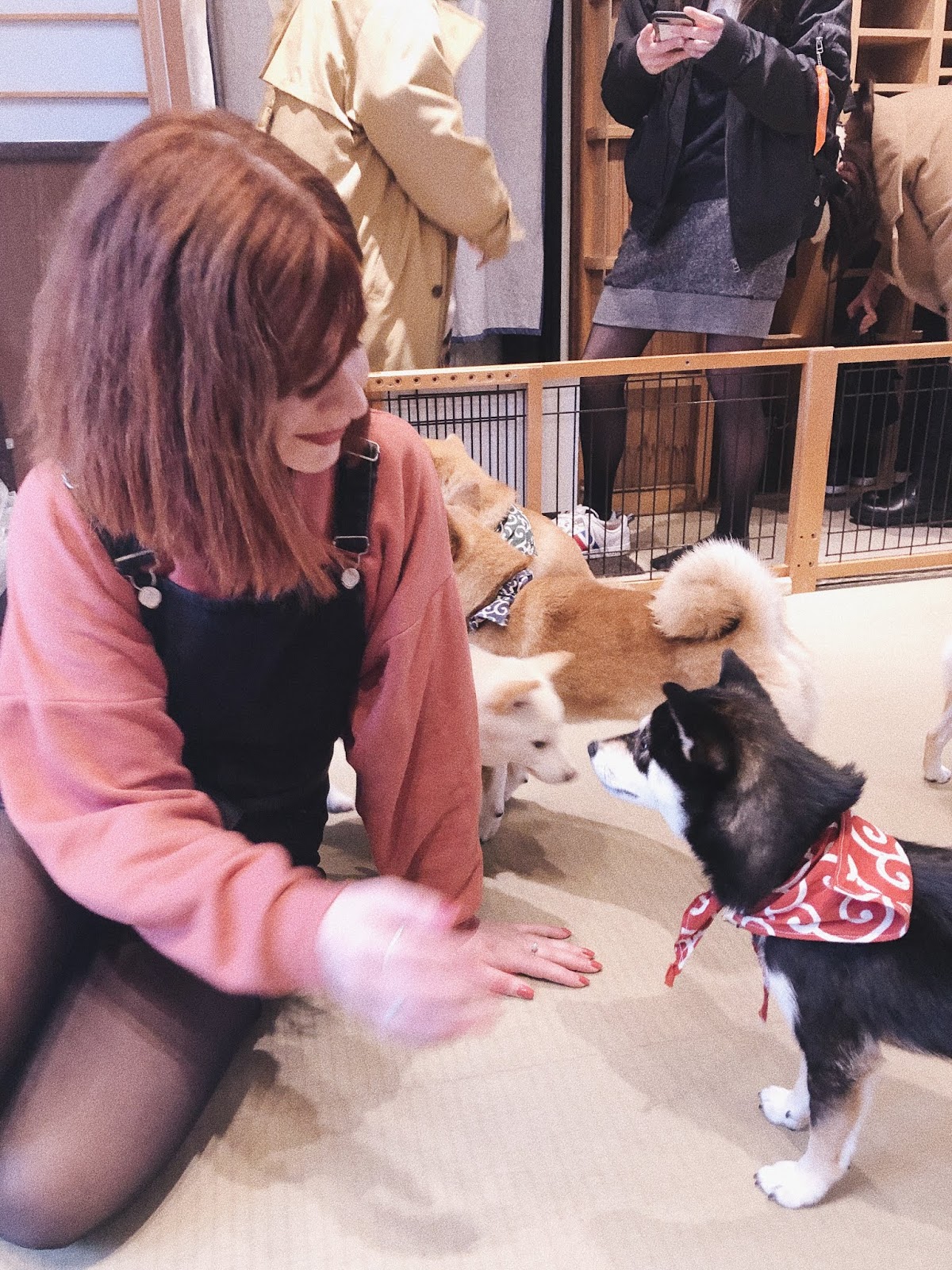
We spent half an hour in a Shiba Inu dog cafe (be warned it smelt like feet in here) but the dogs were very cute. There were also Owl Cafes, Bengal cat cafes and other aesthetically pleasing cafes too to get your bubble tea fix.

dog cafe

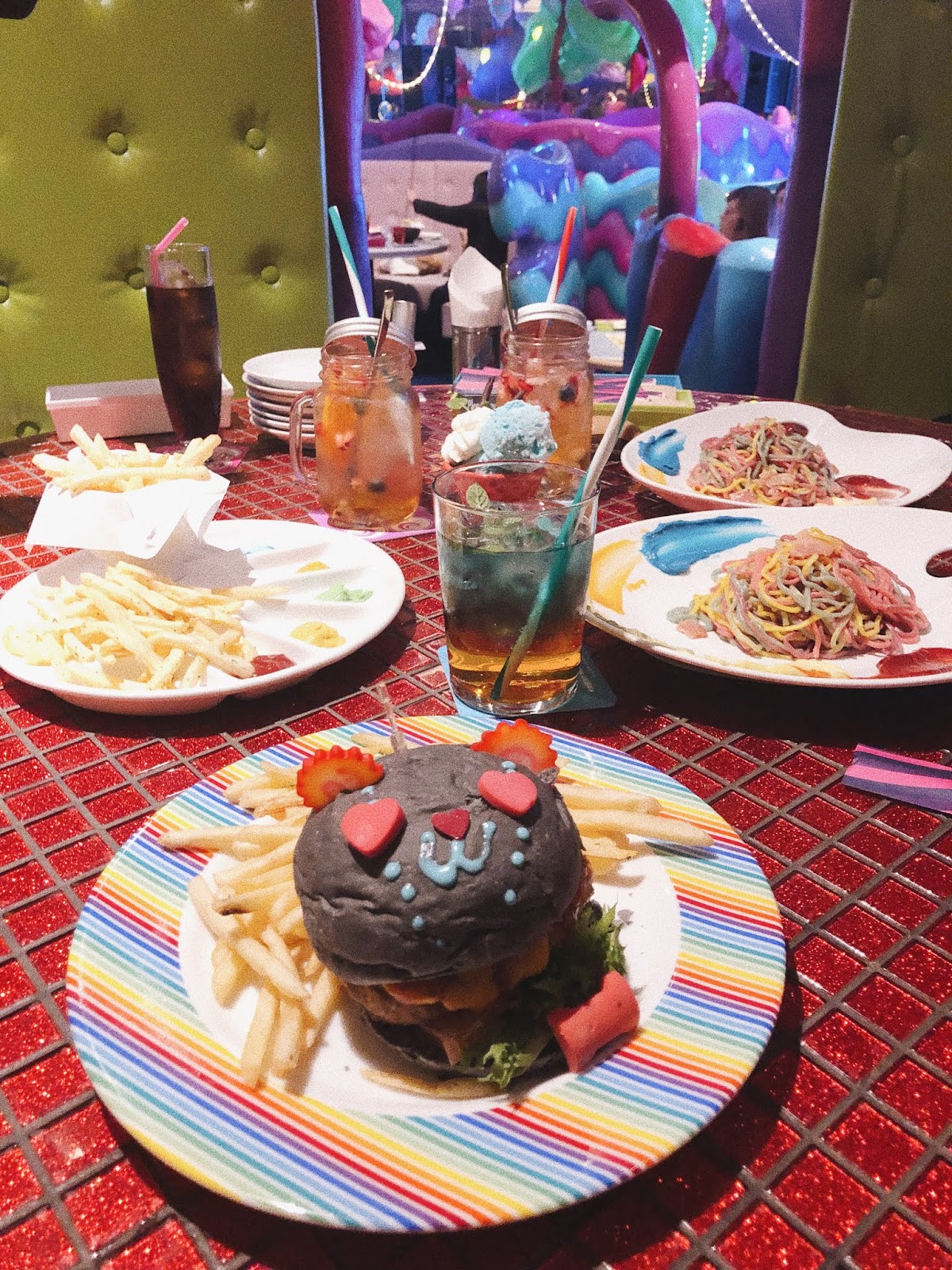
A 15 minute walk from this street you will find the Kawaii Monster Cafe - which is probably aimed at children in terms of the quality of the food, but it's definitely an experience. The place is an explosion of colour and there are live shows everyday, and here you can find colourful spaghetti, pink burger buns and french fries paired with an array of colourful sauces. If you're planning on going in the evening then I recommend booking in advance through GetYourGuide or Viator.

monster cafe


Roppongi: This is the 'Mayfair' of Tokyo and there are a lot of rooftop bars here too. We didn't find there was a lot to see during the day but that it became buzzier and full of life in the evening. If you also fancy a change from Japanese food there is a great gluten free and vegan pizza place called Pizzakaya here. 

Fuji: Whilst you're in Tokyo, I definitely recommend taking a day trip to Mount Fuji. We paid £45 which included pick up from Ueno station and drop-off (1.5 hour journey), and we visited 3 locations. We couldn't actually go to the 5th Station (entrance to the mountain) as it had been snowing and so the roads were too slippery, but we did get great views of Fuji from Kawaguchiko lake and Oshino Hakkai. The Oshino Hakkai village was very cute and there were a number of little shops scattered around, where you could also buy white strawberries, and we got some matcha ice-cream cause we were matcha obsessed that week.

mount fuji

GETTING AROUND 

The journey from Tokyo Narita airport to the centre was pretty straight forward. When you exit after arrivals, opposite you will see a counter for the Keisei Skyliner train which will get you to Keisei Ueno Station in around an hour and a half for around £20. 

The subway/train system was a tad more confusing as there are different companies running the subway and you need a new ticket for certain lines/stations. So your best option is to buy the tickets as you go along or get a return if you're just going to one location and back. Most single journeys were under 300 yen (£2). 


TIPS FOR TOKYO, JAPAN

  • Don't walk and eat - it's considered rude, so if you buy something from a stick etc at one of the food stalls, stand on the side and eat it instead. 
  • Line up when waiting for the subway - this is probably something we should adopt in the UK instead of everyone trying to get on to the central line at Waterloo like cattle. When you get down to the subway you might notice that there's be people lining up in an orderly fashion to get in to the train. 
  • Carry more cash than you usually would, because we found a lot of places were cash only. There were also machines around the city where you could slip in your GBPs and get yen in exchange. 
  • Start your days early. I mean I'm sure when we all travel we're out of bed earlier than usual, but things tend to shut early in Japan so to avoid disappointment (and bigger crowds) try and be out of your hotel by 8:30am. 
  • Cross your fingers if you want to say no (like this πŸ™…πŸ½ and yes like thisπŸ‘ŒπŸΌ), because shaking your head doesn't have the same meaning here. 
  • Make use of all the toilet button functions. 

Obviously there is a lot more to do and see in Japan than what is on this list, we also came across a lot of shrines just by wandering around (but truth be told I can't remember the names of a lot of them). 

Have you ever been to Tokyo? What did you get up to on your trip? 

G


© TEA WITH GI. Design by FCD.